Transforming Orthodontic Care: The Role of AI in Tracking and Patient Compliance
In orthodontic treatment, precise tracking of tooth movement is essential. A common predicament arises when a patient's lateral incisor fails to align as anticipated. This situation complicates the treatment plan and causes delays in achieving the desired outcomes. Employing advanced technologies can significantly enhance the tracking process and facilitate timely interventions.
1/21/20252 min lesen


Solutions through Artificial Intelligence
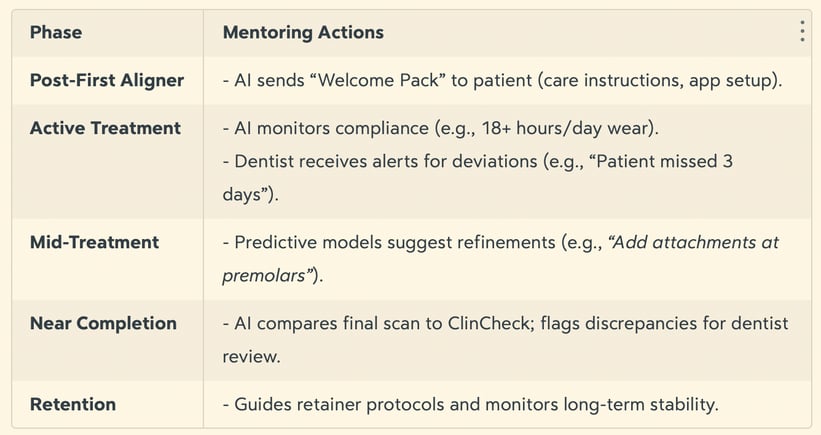
Artificial intelligence plays a critical role in identifying discrepancies between expected and actual outcomes. In this specific case of the lateral incisor misalignment, AI systems analyze data from weekly scans against the initial clincheck, or treatment plan. The technology swiftly identifies a mismatch, allowing for an immediate response.
Upon detection of this issue, the dentist receives a proactive alert recommending a rescan at week 8, alongside a suggestion to consider interproximal reduction (IPR). This quick action not only mitigates potential delays but also ensures that adjustments can be made early in the treatment process, leading to higher efficacy in orthodontic care.
Addressing the Challenge of Non-Compliance
Compliance is another significant factor that can influence the success of orthodontic treatments. For instance, many adolescents struggle with wearing their aligners for the recommended duration. A teenager who only wears their aligners for 12 hours a day may face extended treatment times and less satisfactory results.
To combat non-compliance, AI systems can trigger automated reminders that prompt both the patient and their parents through a dedicated app. This proactive approach not only improves patient accountability but also reinforces engagement in the treatment process. Moreover, the dental practice can further support the patient by scheduling motivational video calls with the mentoring team, reinforcing the importance of adherence and offering encouragement.
The Future of Orthodontic Treatment
Utilizing artificial intelligence in orthodontic practices marks a transformative step towards improved patient care and treatment outcomes. By detecting tracking issues quickly and addressing non-compliance through automated systems, healthcare providers can enhance their service delivery. As these technologies continue to evolve, they will undoubtedly play an increasingly vital role in the orthodontic field.
In summation, the integration of AI in orthodontics facilitates timely interventions for tracking issues and promotes patient compliance. This innovation leads to more personalized treatment, ultimately enhancing patient satisfaction and treatment efficiency.